


If you’ve ever seen someone absolutely lost in video games: eyes glazed, time forgotten—you might have wondered, “What is the secret ingredient?” Why do these virtual worlds feel more compelling than sometimes, well, real life?
The truth is that modern video games are less about random fun and more about precision psychology. Game designers are not just artists and coders; they are masters of the human brain, crafting digital environments that perfectly align with our deepest, often unmet, psychological needs.
Here are the three psychological super-hooks that make virtual worlds so powerful.
1. The Dopamine Dealer: Your Brain’s Easy Button for Happiness
Every human action is driven by the search for dopamine—the neurotransmitter associated with pleasure, motivation, and learning. When you achieve something, dopamine tells your brain, “This is a survival mechanism. Remember how you did that!”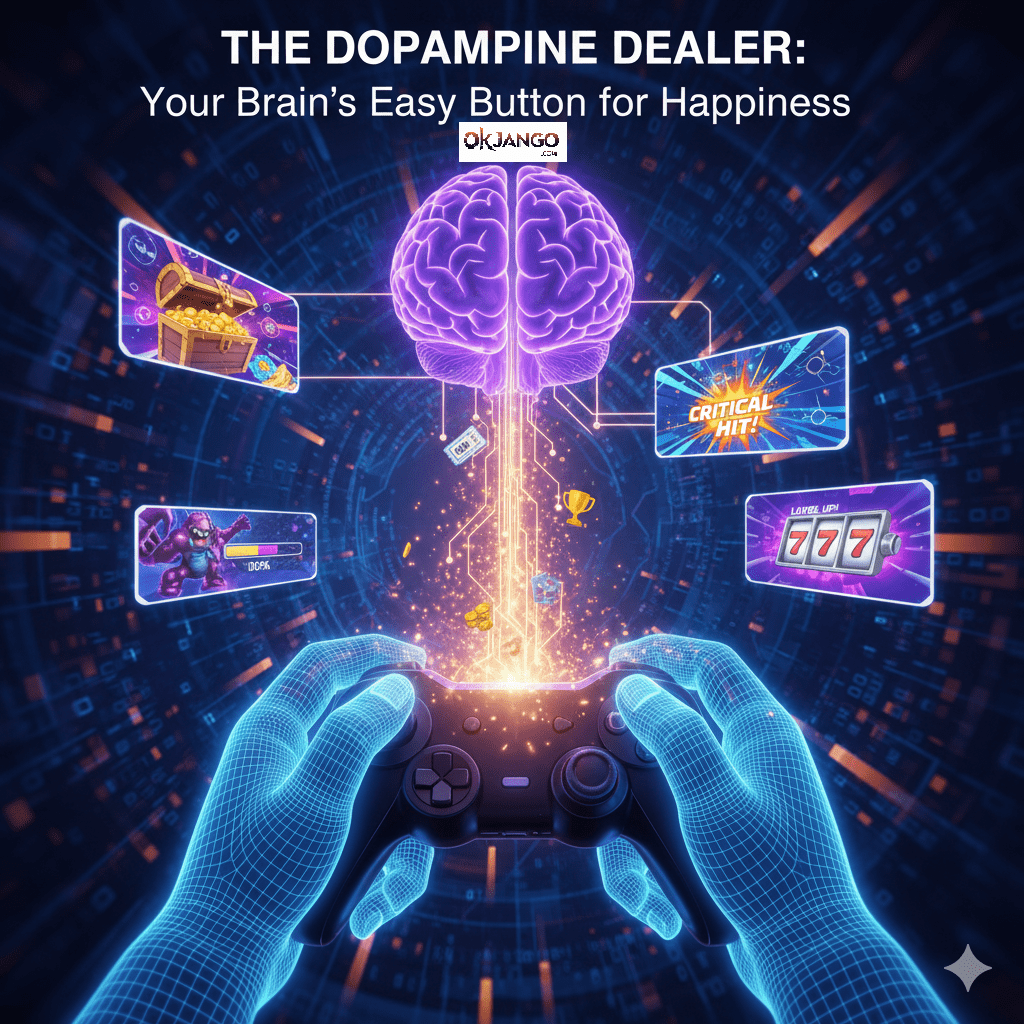
Games exploit this system ruthlessly, creating a constant drip-feed of joy:
- The Unpredictable Hit: Imagine a monster that drops a powerful item only 3% of the time. That 97% failure rate makes the eventual success feel like winning a jackpot. This is called variable reinforcement, and it’s what keeps people pulling the lever, or in this case, clicking the attack button.
- Aural Rewards: The satisfying K-CHING sound of earning a coin, the dramatic musical flourish of a level-up—these instant auditory signals cement the reward in your memory far more effectively than silence would.
- The Power Fantasy: Whether it’s clearing a challenging dungeon or landing a perfect headshot, the feeling of mastery in a game is a concentrated, immediate dose of competence that the real world rarely delivers so quickly.
The takeaway? Games offer a guaranteed, immediate, and perfectly packaged dopamine reward loop, making the real world, with its slow, messy progress, feel dull by comparison.
2. The Perfection of Progress: Taming the Chaos of Real Life
In the real world, progress is ambiguous. Are you a better person than last year? Hard to say. In virtual worlds, progress is a shining, measurable, undeniable truth.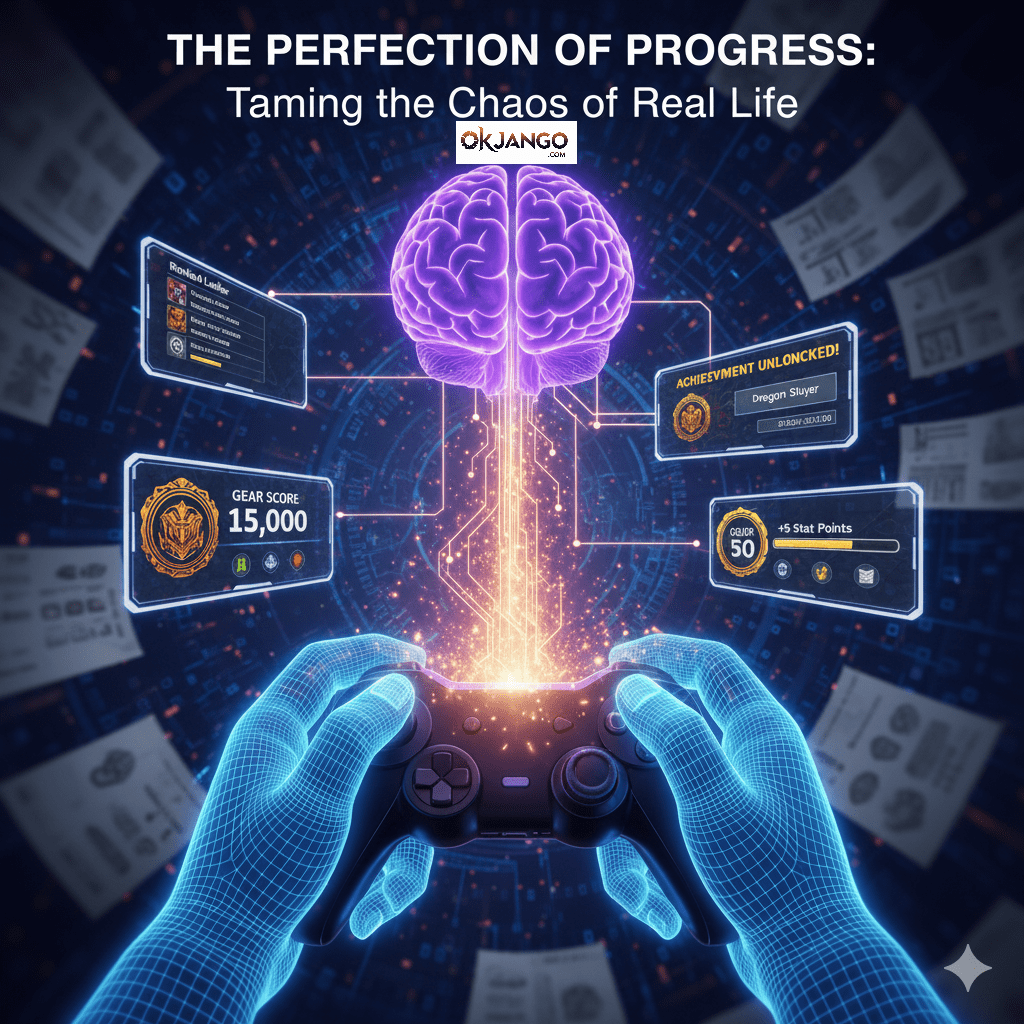
Games give us what life often denies: immediate, visible affirmation.
- Climbing the Ladder: Every game provides a clear hierarchy—a ranked ladder, a leaderboard, or a gear score. Players crave the status and recognition that comes from seeing their name move up and their avatar look cooler.
- Perfect Milestones: You don’t just “get better”; you hit Level 50. and then you complete the “Dragon Slayer” achievement. You receive a title. These concrete milestones confirm that your time and effort have translated into visible, permanent success.
- The Illusion of Control: Life is chaotic. A video game is not. The rules are clear, the goals are set, and the outcome depends (mostly) on your skill and persistence. This sense of predictability and control is a powerful psychological anchor.
It’s less about escaping reality and more about escaping inefficiency. Why struggle for a vague goal in life when you can flawlessly achieve a visible goal in a game?
3. Identity and Brotherhood: The Ultimate Social Club
Today’s most engaging games thrive on social engineering. They turn solitary play into a communal, high-stakes experience that satisfies our fundamental need to belong.
- The Shared Burden: Games force players to form clans, guilds, and teams. If you don’t log in for the raid tonight, you let your friends down. This feeling of social obligation is a massive hook, making quitting feel like abandoning a family.
- Finding Your Role: You might be quiet in the office, but in the game, you could be the legendary Tank, the brilliant strategist, or the essential healer. Games allow you to adopt a desired digital identity where you are respected and needed.
- The Water Cooler Effect: Even in single-player games, the urge to talk about your achievements—to share a screenshot of a rare find or discuss a tricky boss fight—drives social media engagement and keeps the game in the front of your mind, even when you’re away from the screen.
In essence, these games are meticulously crafted psychological playgrounds. They offer easy, powerful doses of dopamine, instant and visible proof of competence, and a ready-made community where you are always valued.
The Fine Line: When Fun Becomes a Problem
While gaming is a fun hobby for most, it crosses into addiction when a person loses control and experiences negative consequences.
It might be a problem if the person is:
- Skipping life events (school, work, family time) to play the game.
- Lying about how much time they spend gaming.
- Feeling intense anger or sadness when they can’t play.
- Continuing to play even when they know it’s hurting their sleep or relationships.
Understanding these psychological hooks is the first step. By recognizing why the game feels so necessary, players can start to find balance and make sure the screen stays a source of fun, not a controlling force.
Do you know someone who games? Understanding these simple concepts can help you better understand their hobby!
Relevant Reference Links on Video Game Addiction (Internet Gaming Disorder – IGD)
Video game addiction (often referred to as Internet Gaming Disorder, or IGD, in clinical settings) is a significant area of psychological and neurobiological research.
The following links provide insights into the causes, risk factors, treatment options, and neurobiological effects of problematic or compulsive video game use, drawing from academic research and clinical perspectives.
1. Causes and Risk Factors
These articles discuss why individuals develop problematic gaming habits, focusing on psychological, social, and personality factors.
- Gaming addiction | Research Starters – EBSCO
- Focus: Defines gaming addiction (pathological video game use), its characteristics, and underlying psychological causes like stress release, escapism, autonomy, and the fulfillment of unmet social needs, particularly in MMORPGs.
- (PDF) Video Game Addiction, Its Risk Factors, and Relationships with the Big Five Personality Traits – ResearchGate
- Focus: Explores the behavioral addiction nature, the dopamine effect, and psychological risk factors like neuroticism, low conscientiousness, and pre-existing relationship issues.
- Video Game Addiction: Signs, Risk Factors, and ADHD Links – ADDitude
- Focus: Highlights risk factors such as impulsivity, low self-control, low self-esteem, anxiety, and a strong association with Attention-Deficit/Hyperactivity Disorder (ADHD) and depression.
- An Evaluation of the Factors Related to Internet Gaming Disorder in Young Adults – PMC
- Focus: Examines sociodemographic and behavioral risk factors, including poor family harmony, poor academic performance, making money from online games, and lying about gaming time.
2. Treatment Options
These resources detail current evidence-based interventions used to treat Internet Gaming Disorder (IGD).
- Effective interventions for gaming disorder: A systematic review of randomized control trials – Frontiers in Psychiatry
- Focus: Systematically reviews effective interventions, highlighting that group counseling, Cognitive Behavioral Intervention (CBI), Acceptance and Commitment Therapy (ACRIPT), and short-term CBT are effective.
- Video Game Addiction: What It Is, Symptoms & Treatment – American Addiction Centers
- Focus: Outlines behavioral modification therapies like Cognitive-Behavioral Therapy (CBT), group therapy, and family/marriage counseling. Also discusses the potential need for pharmacotherapy for co-occurring mental health disorders like depression or anxiety.
- A Systematic Review of Pharmacological Treatments for Internet Gaming Disorder – PMC
- Focus: Reviews the efficacy of pharmacological treatments for IGD, noting the use of drugs like bupropion and methylphenidate, often in combination with psychological treatments.
3. Neurobiological and Clinical Perspectives
These links explore the debate around addiction classification and the brain changes observed in compulsive gamers, often drawing parallels to substance use disorders.
- Is video game addiction really an addiction? – PNAS
- Focus: Discusses the controversial classification of IGD, presenting neuroimaging evidence (fMRI) that suggests video games activate the brain’s dopamine-driven reward system in ways similar to substance abuse and gambling.
- Neurobiological Correlates in Internet Gaming Disorder: A Systematic Literature Review – PMC
- Focus: Summarizes neurobiological differences in individuals with IGD compared to healthy controls, noting impaired prefrontal cortex (PFC) functioning, poorer response inhibition, and structural changes in brain regions related to reward and emotional regulation.
- Neurobiological basis of Internet gaming disorder: insights from functional MRI studies – Archives of Clinical Psychiatry
- Focus: Detailed look at fMRI research, summarizing changes in reward processing, impulse control, and cognitive flexibility, reinforcing the idea that IGD disrupts brain networks similarly to drug use disorders.
Read more blogs at OkJango.com
