


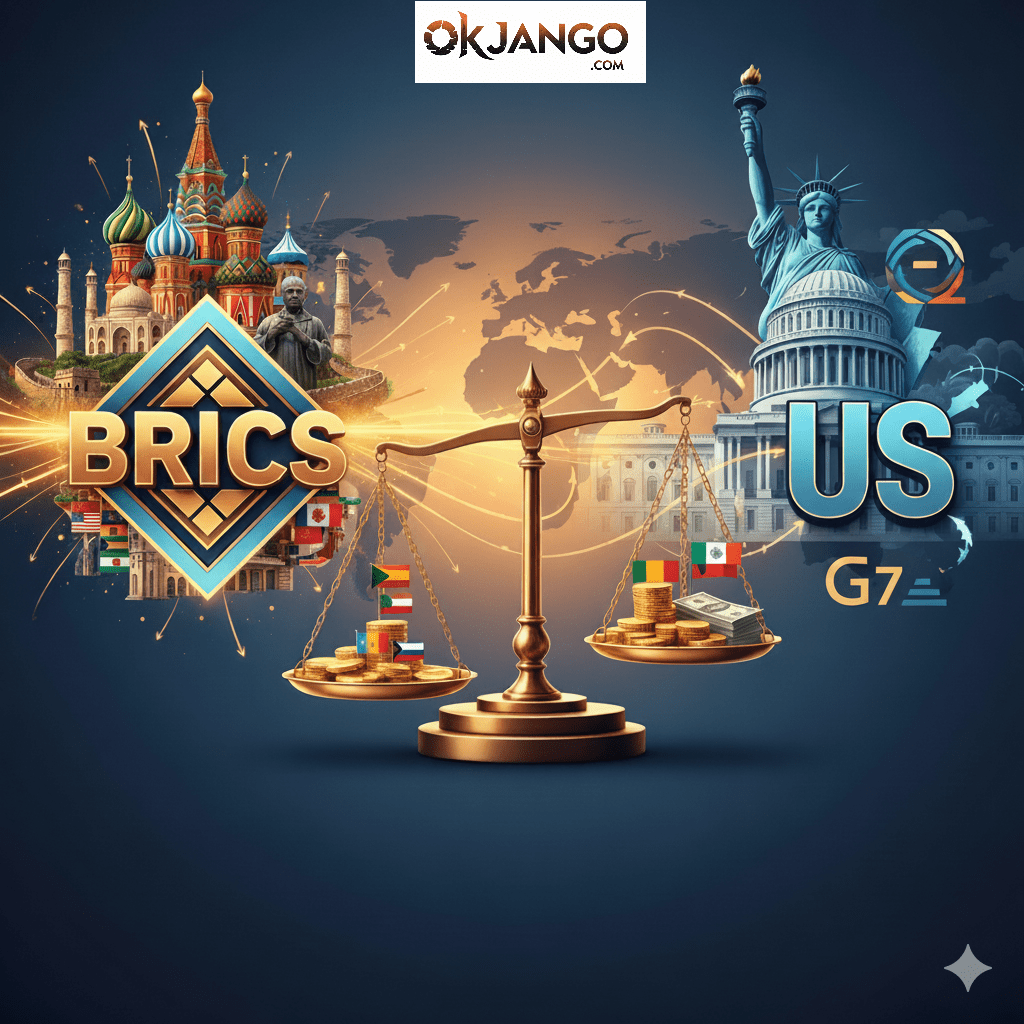
The world order is shifting. For decades, the United States (US) held unchallenged global supremacy. However, the rise of the BRICS group now presents a real challenge.
BRICS originally included Brazil, Russia, India, China, and South Africa. Furthermore, with recent BRICS expansion, the group welcomed major nations like Saudi Arabia, Iran, and the UAE. This enlarged bloc represents a significant share of the world’s population and economic power. Therefore, many observers ask a crucial question: Can BRICS successfully challenge US dominance?
The Core Challenge: De-Dollarization and Finance
The biggest fight happens on the economic power front. The US Dollar (USD) serves as the world’s main reserve currency. Consequently, the USD gives the US immense financial and political influence.
However, BRICS nations actively pursue de-dollarization. In fact, members want to reduce their reliance on the USD in global trade. Therefore, they increasingly settle bilateral trade using their own national currencies. For example, China and Russia often use the Yuan or the Ruble for oil and gas deals.
Moreover, BRICS created the New Development Bank (NDB). This bank directly challenges the traditional power of the US-led World Bank and IMF. Thus, the NDB offers developing countries development finance without political conditions. Ultimately, this move offers the Global South a powerful new economic alternative.
Geopolitics: The Shift to a Multipolar World
The BRICS expansion also changes the geopolitical landscape. Therefore, the alliance now represents diverse regions and cultures. Also, the expanded group possesses significant sway over global energy markets. Consequently, the BRICS members collectively account for a huge portion of the world’s oil supply.
The BRICS objective remains clear: establishing a multipolar world. This means a world where no single country, including the US, holds all the power. In summary, the group aims to give the Global South a stronger voice in international affairs.
Conversely, the US and its allies, like the G7, often view this expansion as a direct threat. However, many developing nations simply want more options. They seek a platform to advance their own interests without relying solely on Western institutions.
US Strengths vs. BRICS Challenges
Nevertheless, challenging US dominance remains extremely difficult. The US still maintains crucial, unmatched advantages.
| US Advantages | BRICS Challenges |
| Financial System: The USD commands unrivaled liquidity and institutional trust globally. | Internal Divisions: Members like China and India still possess significant, long-standing border disputes. |
| Military Power: The US military remains the world’s preeminent force. | Lack of Cohesion: Furthermore, the BRICS group lacks a single, unified foreign policy or shared political system. |
| Innovation & Demographics: The US leads in key technological sectors and enjoys a healthier demographic profile. | Structural Weaknesses: Many BRICS members suffer from infrastructure gaps and reliance on raw material exports. |
Therefore, the US continues to dominate global technology, military alliances, and financial infrastructure. Thus, BRICS must overcome its own internal differences to become a truly cohesive counterweight.
Conclusion: A Shift, Not an Overthrow
Ultimately, the answer to the question is nuanced. BRICS emerging powers currently cannot completely overthrow US dominance. However, they certainly challenge it.
Consequently, we witness a transition from a unipolar world to a multipolar world. Moreover, the BRICS expansion successfully created an alternative system for finance and trade. This new system reduces the power of US-led institutions. Therefore, the US must now share the table. The competition will not end soon, but the era of unchallenged US dominance is certainly over.
Relevant Reference Hyperlinks
Here is a selection of external links for further reading on the BRICS vs. US dynamic:
- Geopolitical and US Strategy: What’s Driving a Bigger BRICS and What Does it Mean for the U.S.?
- The De-Dollarization Threat: The U.S. Shouldn’t Dismiss BRICS Challenge
- Economic Comparison: Economic Models and Growth Trajectories of BRICS+ and G7: A Comparison
- Future of US Policy: US Policy on BRICS: A Temporary Fix or a Strategic Reset?
Read more blogs at : Okjango.com
