


What Defines a True Winter?
A winter is one of the four temperate seasons, traditionally the coldest time of year. Astronomically, it begins with the winter solstice (shortest day) and ends with the spring equinox (day and night are equal). However, in terms of climate, a “proper winter” is generally defined by sustained, severe cold, often involving freezing temperatures (below 0°C or 32°F), snowfall, and frozen bodies of water.
The Physics of Frost: Earth’s Axial Tilt Explained
Winter happens all because of a cool thing about our planet: Earth is tilted!
Imagine the Earth is like a spinning top, but it’s leaning to one side. As this leaning Earth goes around the Sun, sometimes its top half (the Northern Hemisphere) is tilted away from the Sun, and other times its bottom half (the Southern Hemisphere) is tilted away.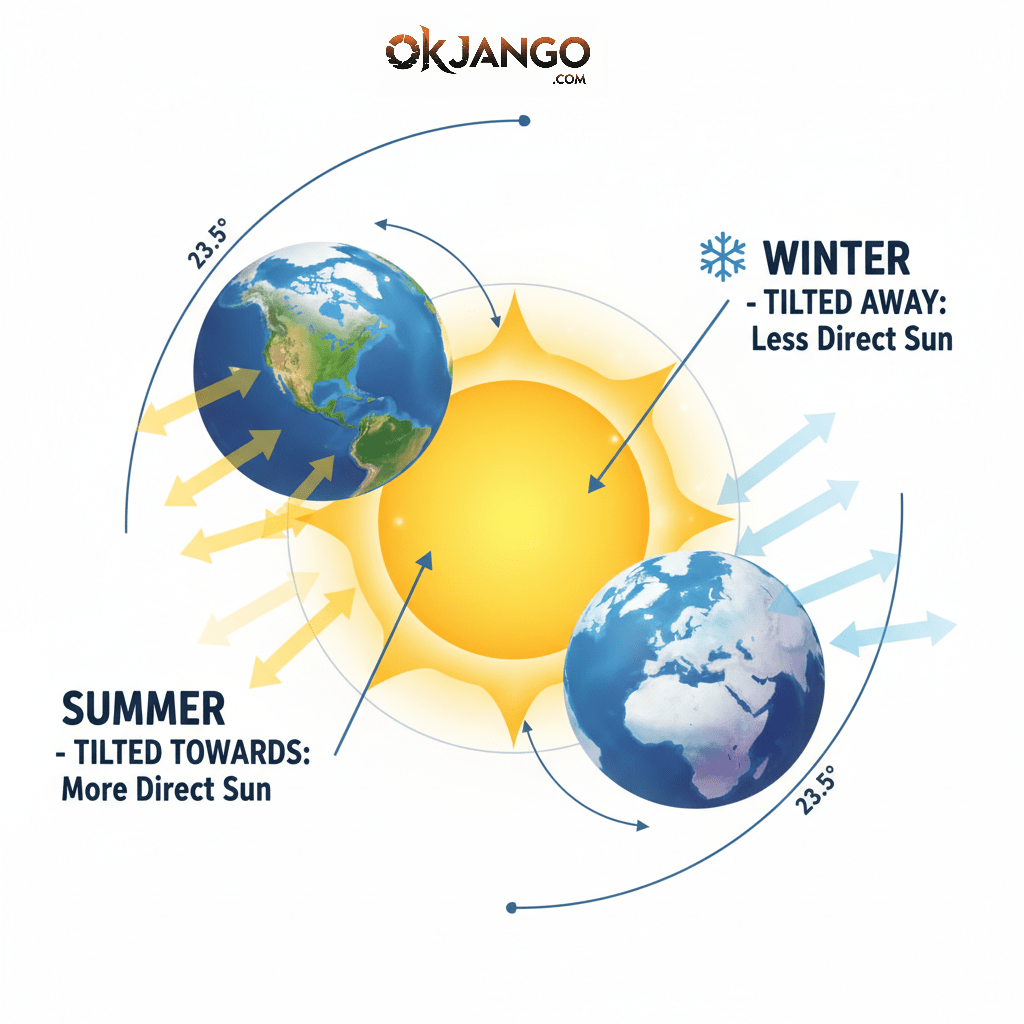
When your part of the world is tilted away from the Sun:
- Less Direct Sunlight: The sunlight hits your area at a slant, not straight on. Think of trying to warm your hands with a flashlight held sideways – it’s not as strong as when held directly.
- Shorter Days: The Sun also stays in the sky for fewer hours each day, meaning less time for it to warm things up.
- Cooling Down: With less direct sunlight and shorter days, your part of the world doesn’t get as much energy from the Sun. This causes temperatures to drop significantly, bringing us winter!
It’s just like how a slanted sunbeam doesn’t feel as hot as a direct one!
🥶 Global Realms of Intense Cold: Countries with Proper Winter Climate
Proper winter climates—those characterized by multiple months of sub-freezing temperatures and heavy snow—are primarily found in the high latitudes of the Northern Hemisphere, often extending into the sub-Arctic and Arctic regions.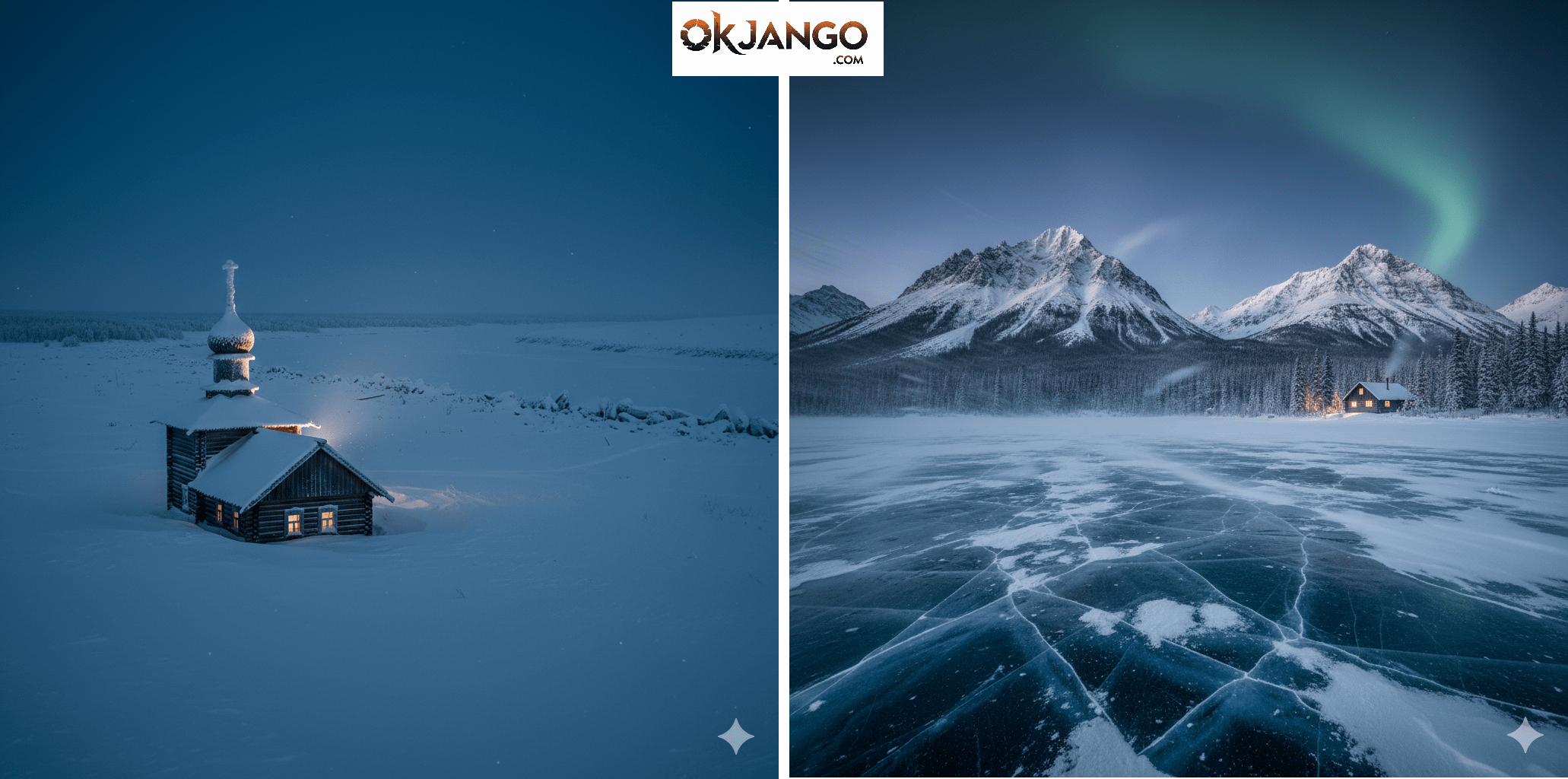
Here are some of the most prominent examples, with typical average minimum and maximum winter temperatures (December to February):
| Country | Min Avg. Winter Temperature | Max Avg. Winter Temperature | Key Winter Characteristics |
| Russia (Siberia/Far East) | -40°C (-40°F) | -10°C (14°F) | Extreme prolonged deep freeze, permanent permafrost, record-low temperatures. |
| Canada (Yukon/Northwest Terr.) | -35 °C (-31°F) | -15°C (5°F) | Vast areas of ice and snow, severe blizzards, cold polar air masses. |
| Greenland (Denmark) | -30°C (-22°F) | -10°C (14°F) | Covered almost entirely by a massive ice sheet, very dry and intensely cold. |
| Finland (Lapland) | -25°C (-13°C) | -5°C (23°F) | Heavy, reliable snow cover, ideal for winter sports, distinct polar night in the far north. |
| Norway (Inland/North) | -20°C (-4°C) | -3°C (27°F) | Freezing fjords, significant coastal snow, and intense inland frost. |
| United States (Alaska) | -25°C (-13°F) | -5°C (23°F) | Arctic tundra, high wind chills, and prolonged darkness. |
| Mongolia | -30°C (-22°F) | -10°C (14°F) | High-altitude continental climate, famous for its bitter, dry “dzud” (winter disaster). |
Note: These ranges represent the temperatures in the coldest, most characteristic winter regions of each country, not the national average.
Relevant Reference Links
- NASA: Earth’s Seasons
- National Geographic: What is Permafrost?
- NOAA: Understanding the Seasons
Read more blogs at : Okjango.com
Frequently Asked Questions (FAQs)
Which country has the coldest winter on Earth?
Russia, specifically the Siberian region. The town of Oymyakon, often referred to as the “Pole of Cold,” has recorded the lowest temperature ever in a permanently inhabited place: -67.7°C (-89.9°F).
Does the Southern Hemisphere have a proper winter?
Yes, but the landmasses at high latitudes are much smaller. Countries like Antarctica (though not a country, it’s the coldest continent) and the southernmost parts of Argentina and Chile (Tierra del Fuego) experience a proper winter, but their winter months are June, July, and August.
What is the main characteristic of a proper winter climate?
The main characteristic is sustained temperatures below freezing (0°C or 32°F) for extended periods, leading to reliable snow cover and ice formation.
Why are Northern Hemisphere winters generally colder than Southern Hemisphere winters?
The Northern Hemisphere contains significantly more landmass at high latitudes (near the pole) than the Southern Hemisphere. Land loses heat much faster than the ocean. Since the Southern Hemisphere has far more ocean, the water’s moderating effect keeps its continental landmasses (like South America, Australia, and Africa) generally milder than continents like North America and Eurasia at similar latitudes.
Which major world capital is officially the coldest?
Ulaanbaatar, Mongolia, holds the distinction of being the coldest national capital city in the world.3 Due to its high elevation and location far from any coast (extreme continental climate), its average yearly temperature hovers just below freezing, with winter lows often reaching -40°C (-40°F).
Is Antarctica a country, and what is its record cold temperature?
Antarctica is a continent governed by the Antarctic Treaty System, not a single country.7 It is the coldest place on Earth. The lowest officially recorded air temperature was at the Russian Vostok Station: -89.2°C (-128.6°F) in July 1983.
Which country experiences the longest winter season?
Regions in the far north of countries like Russia (Siberia) and Canada (Yukon/Nunavut) experience the longest winter seasons, which can last for up to 7 to 9 months, sometimes with minimal to no direct sunlight (polar night).
Does it snow in Africa, a continent often considered hot?
Yes, it snows regularly in several parts of Africa due to high altitude. The mountainous kingdom of Lesotho, which has the highest low point of any country in the world, sees regular winter snowfall (June to September) and even hosts the Afriski ski resort. Snow also falls on the highest peaks of the Atlas Mountains in Morocco and the mountains of South Africa.
What is the primary cause of the severe cold in Siberia?
The extreme cold in Siberia is caused by its continental location and high latitude. Being located far from the moderating influence of oceans results in massive temperature swings between summer and winter. This allows bitterly cold, heavy, dense air masses (Siberian High) to settle over the region for months, creating a deep, sustained freeze.
