


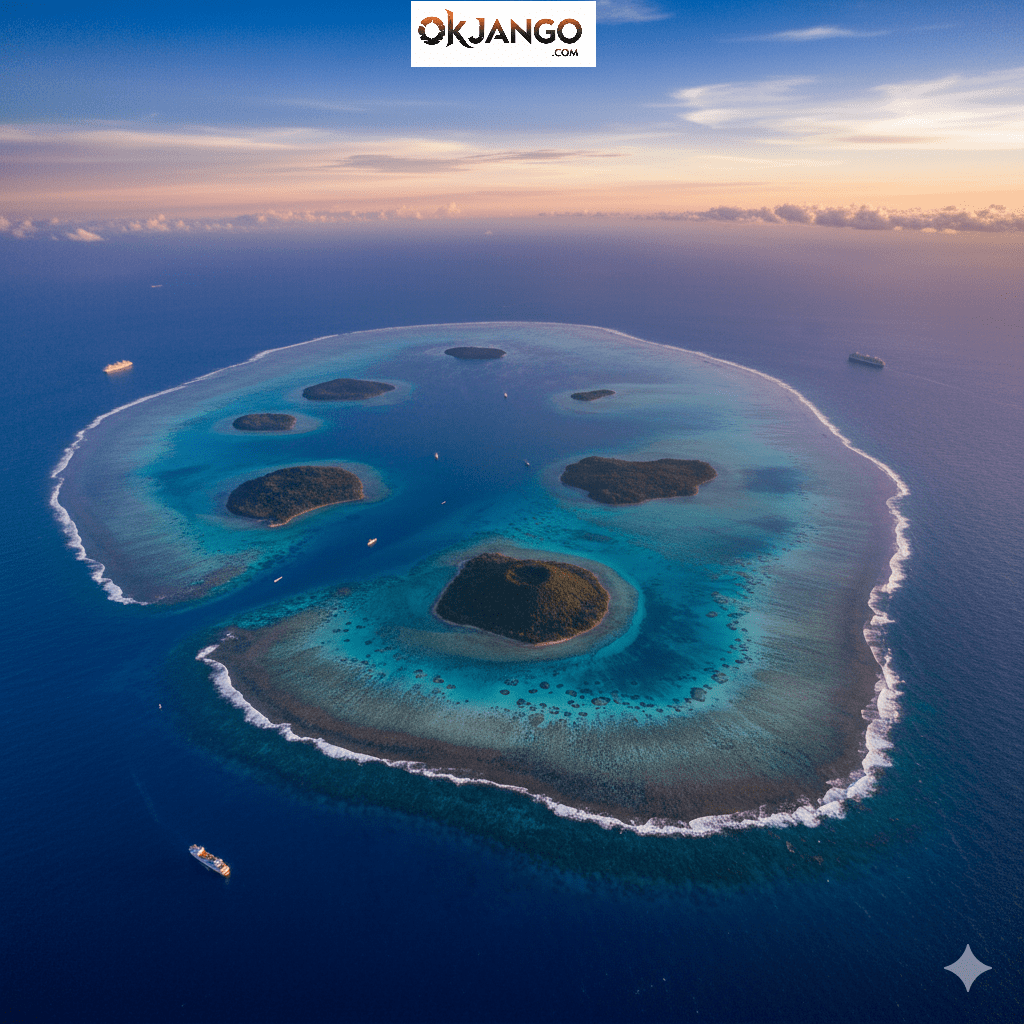
The Pacific Ocean is a colossal body of water, the largest and deepest of the world’s five oceans. It stretches from the Arctic Ocean in the north to the Southern Ocean in the south. The ocean is bounded by the continents of Asia and Australia in the west. The Americas border it in the east. The Pacific covers approximately 46% of Earth’s water surface. It makes up over 30% of the planet’s total surface area. This enormous size makes it larger than all of Earth’s landmass combined.
This immense basin is the largest oceanic division on the planet. It is also the oldest and deepest. The basin contains roughly half of the free water on Earth. Its expanse is dotted with approximately 25,000 islands. This is more than in all the other oceans combined. Most of these islands lie south of the equator. The ocean’s current structure is a relic of the ancient Panthalassa superocean. This super ocean surrounded the supercontinent Pangea millions of years ago.
The Origin of the Name: Why is it Called “Pacific”?
The name “Pacific” comes from the Latin word pacificus, which beautifully translates to “peaceful.”
The Portuguese explorer Ferdinand Magellan (who led the first circumnavigation of the Earth) gave the ocean its name in 1520. After navigating the notoriously difficult and stormy waters of the Strait of Magellan (at the southern tip of South America), his fleet emerged into a vast, calm body of water. He called it Mar Pacífico, or “peaceful sea,” due to the comparatively tranquil conditions he encountered, a fortunate break after the harrowing passage.
Size, Scope, and Global Neighbors: Area and Bordering Countries
The Pacific Ocean covers a staggering area of approximately 165.2 million square kilometers ($63.8$ million square miles).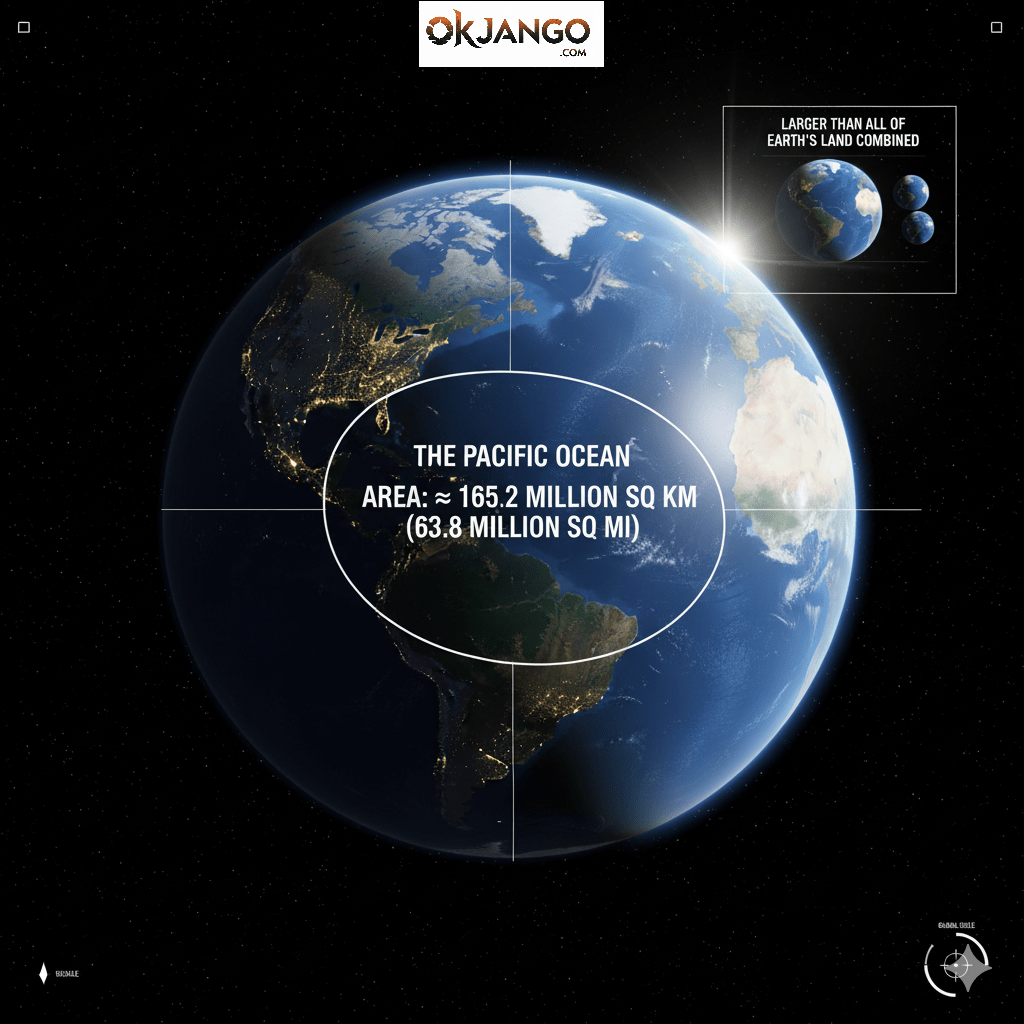
Countries Bordering the Pacific
The Pacific Ocean touches the coasts of numerous countries across four continents, connecting diverse cultures and massive global economies. Key nations bordering this massive body of water include:
| Continent | Major Countries/Territories |
| North America | United States, Canada, Mexico |
| Central/South America | Chile, Peru, Ecuador, Colombia, Panama, Costa Rica, El Salvador, Nicaragua, Guatemala, Honduras |
| Asia | Russia, Japan, China, Philippines, Indonesia, Vietnam, South Korea, North Korea, Taiwan, Malaysia, Thailand, Singapore |
| Oceania | Australia, New Zealand, Papua New Guinea, Fiji, Solomon Islands, Samoa, Tonga |
Exploring the Abyss: The Mariana Trench and the Challenger Deep
The Pacific is home to the deepest point on Earth. That point is the Challenger Deep, which is located within the southern end of the Mariana Trench in the Western Pacific.
- Location: Near the Mariana Islands.
- Depth: Approximately 10,935 meters (35,876 feet).
- Scale Comparison: To put this colossal depth into perspective:
– If you could place Mount Everest (Earth’s highest peak at 8,848 meters) at the bottom of the Challenger Deep, its summit would still be about a mile (over 2,000 meters) underwater.
– Even more strikingly, the Challenger Deep is approximately 13.2 times greater than the height of the Burj Khalifa (828 meters), the world’s tallest building. You would need to stack roughly 13 Burj Khalifas on top of each other to reach this incredible depth!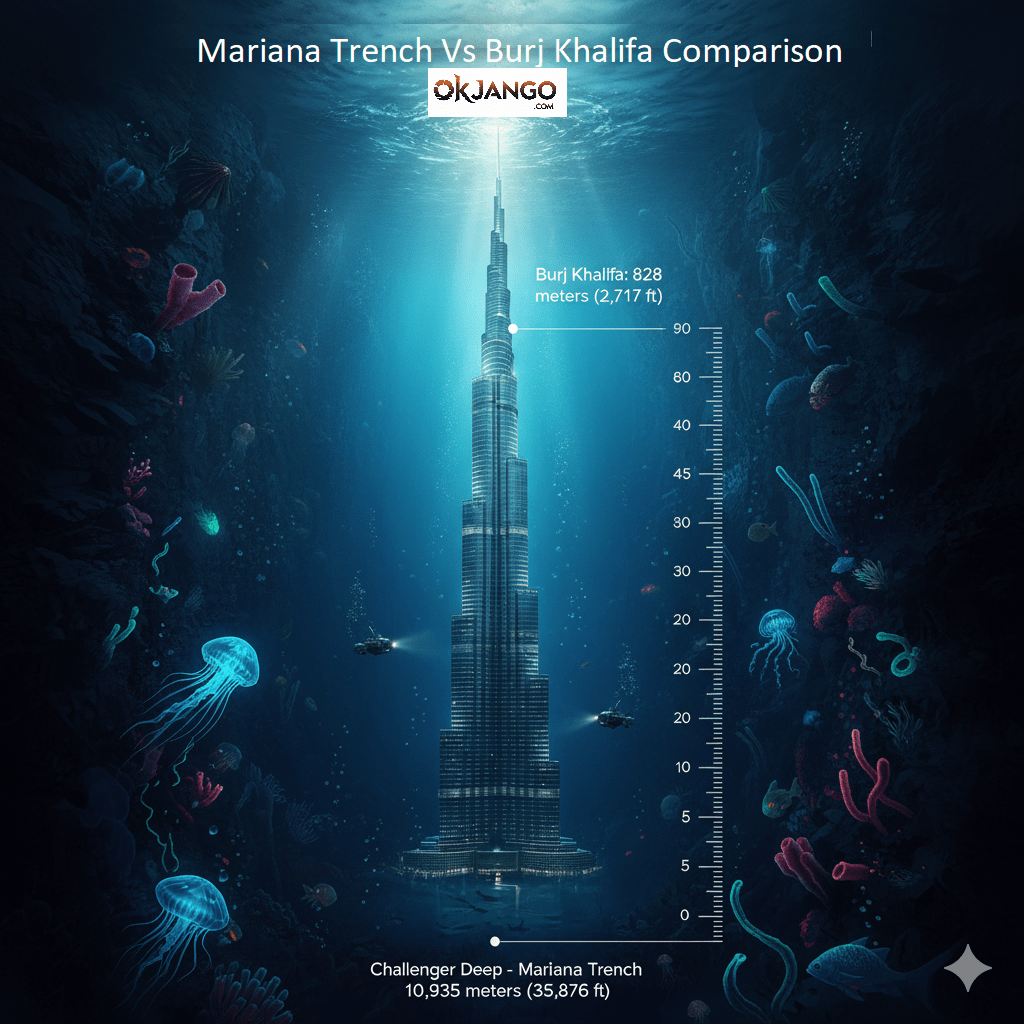
- Pressure: The pressure at this extreme depth is over 1,000 times the standard atmospheric pressure at sea level, equivalent to roughly 8,000 elephants standing on a mini cooper!
Intriguing Discoveries: Fascinating Facts About the Pacific Ocean
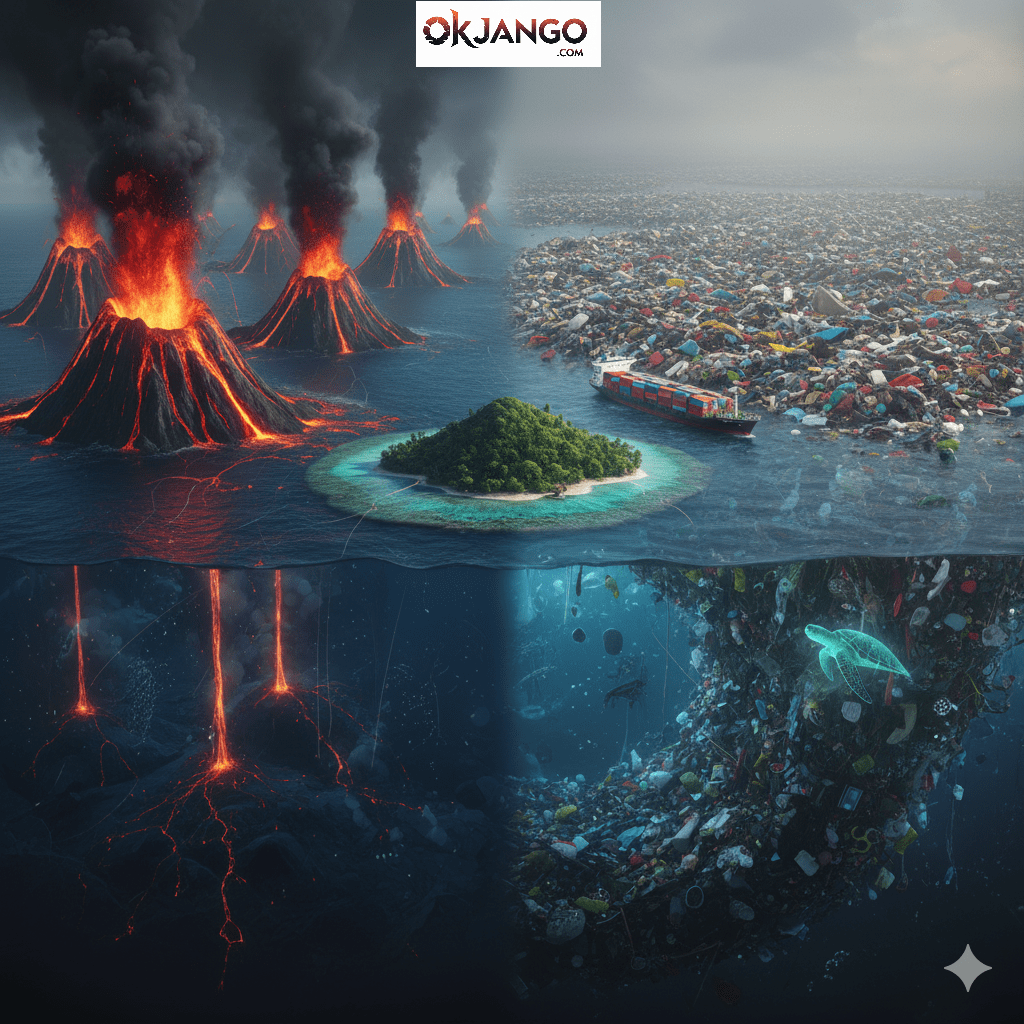
- The Ring of Fire: The Pacific basin is defined by the “Ring of Fire,” a massive, horseshoe-shaped zone of intense seismic and volcanic activity. This zone accounts for about 90% of the world’s earthquakes and over 75% of the world’s active volcanoes.
- The Great Pacific Garbage Patch: Located in the central North Pacific Ocean, this is the largest accumulation zone of marine debris, mostly tiny plastics, in the world’s oceans.
- Island Formation: Most of the islands scattered across the Pacific are either volcanic in origin (like the Hawaiian islands), or coral atolls formed on top of sinking volcanic islands.
- Global Trade Engine: The Pacific hosts some of the world’s most crucial shipping and trade routes, acting as a vital connection between the rapidly growing economies of Asia and the Americas.
Relevant Reference Links
- National Oceanic and Atmospheric Administration (NOAA) Pacific Ocean facts: How big is the Pacific Ocean? – NOAA Ocean Exploration
- Encyclopedia Britannica Pacific Ocean article link: Pacific Ocean | Depth, Temperature, Animals, Location, Map, & Facts | Britannica
- US Geological Survey Ring of Fire information: The Ring of Fire | U.S. Geological Survey
Read more blogs at : Okjango.com
Frequently Asked Questions (FAQs)
How many oceans are there in the world and which is the biggest?
There are five recognized oceans: the Pacific, Atlantic, Indian, Southern, and Arctic. The Pacific Ocean is the biggest.
What is the main characteristic of the Pacific Ring of Fire?
The Ring of Fire is known for its high frequency of earthquakes and volcanic eruptions.
What is the deepest part of the Pacific Ocean?
The deepest point is the Challenger Deep in the Mariana Trench.
Which continents border the Pacific Ocean?
The Pacific borders North America, South America, Asia, and Australia (Oceania).
Which famous canal connects the Pacific Ocean to the Atlantic Ocean?
The Panama Canal, a vital man-made waterway, connects the Pacific Ocean to the Atlantic Ocean, allowing ships to bypass the long route around South America.
What is the main characteristic of the Pacific Ring of Fire?
The Ring of Fire is a continuous area around the Pacific basin responsible for approximately 90% of the world’s earthquakes and is home to over 75% of the world’s active volcanoes.
What is the deepest point in the world’s oceans?
The deepest known point is the Challenger Deep (approx. 10,935 meters), which is located within the Mariana Trench in the Western Pacific.
Why did Ferdinand Magellan name it the Pacific Ocean?
Magellan named it Mar Pacífico (“Peaceful Sea”) in 1520 because he found the waters to be relatively calm and tranquil after navigating the treacherous Strait of Magellan.
What is the Great Pacific Garbage Patch?
It is the largest accumulation zone of marine debris (mostly plastic micro fragments) in the world’s oceans, located in the central North Pacific between California and Japan.
What major climate phenomenon originates in the Pacific?
The El Niño-Southern Oscillation (ENSO) phenomenon, including its warm phase (El Niño) and cool phase (La Niña), originates in the tropical Pacific and significantly affects global weather patterns.
Which is the largest coral reef system in the Pacific Ocean?
The Great Barrier Reef in the Coral Sea, off the coast of Australia, is the world’s largest coral reef system.
How many islands are located in the Pacific Ocean?
The Pacific Ocean contains approximately 25,000 islands, which is more than the total number of islands in all other oceans combined.
Image Attributions / Sources
By Unknown author – The Mariner’s Museum Collection, Public Domain, Link
